Compassionate, Adaptive, Robust and Explainable Robots
Developing the next generation of socially-aware, adaptive and trustworthy robotic systems for human-centred care.
OUR VISION
Building the Future of Socially-Aware Robotics
RoboCARE investigates the next generation of socially-aware robotic systems capable of understanding people, adapting to dynamic situations and explaining their decisions.
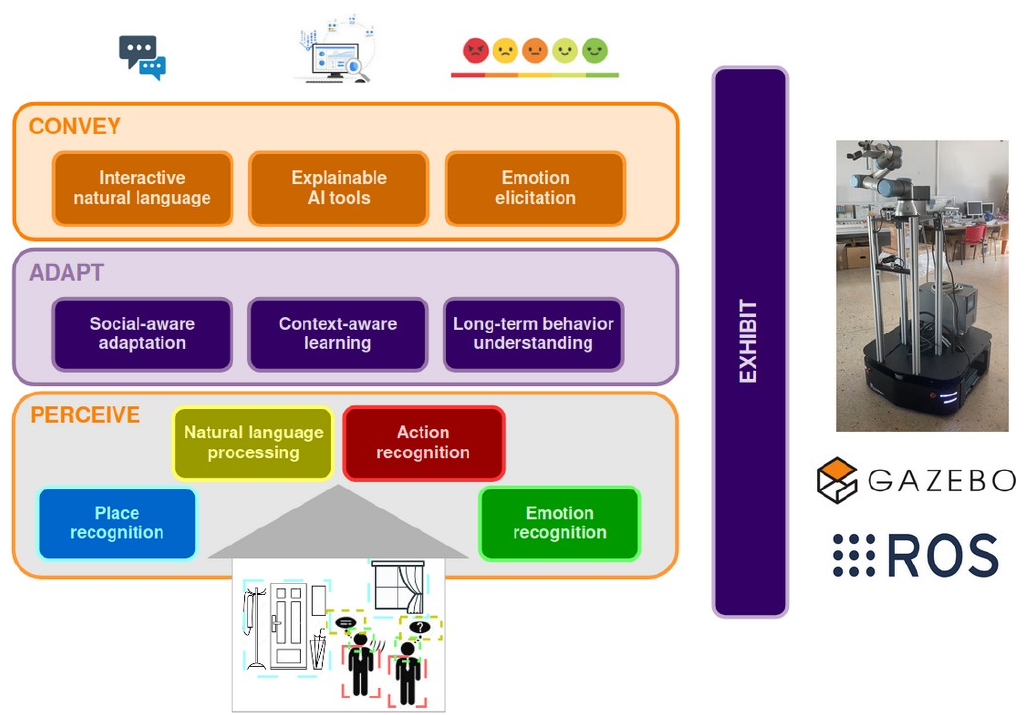
By combining multimodal perception, adaptive intelligence, explainable AI and embodied interaction, the project establishes the scientific foundations for trustworthy robotic assistants in human-centred environments.
RoboCARE combines Artificial Intelligence, Cognitive Robotics and Human–Robot Interaction to build adaptive, explainable and trustworthy robotic assistants.
Figure 1. High-level architecture of the RoboCARE framework
Project Objectives
RoboCARE pursues four complementary scientific objectives that collectively enable socially-aware, adaptive and explainable robotic assistance.
01.
UNDERSTAND
Understanding people through multimodal perception, human activity analysis and affective computing.
RoboCARE validates its technologies through two complementary experimental environments designed to evaluate socially-aware perception, adaptive intelligence and explainable human–robot interaction under realistic conditions.
USE CASE 01
Domestic Environments
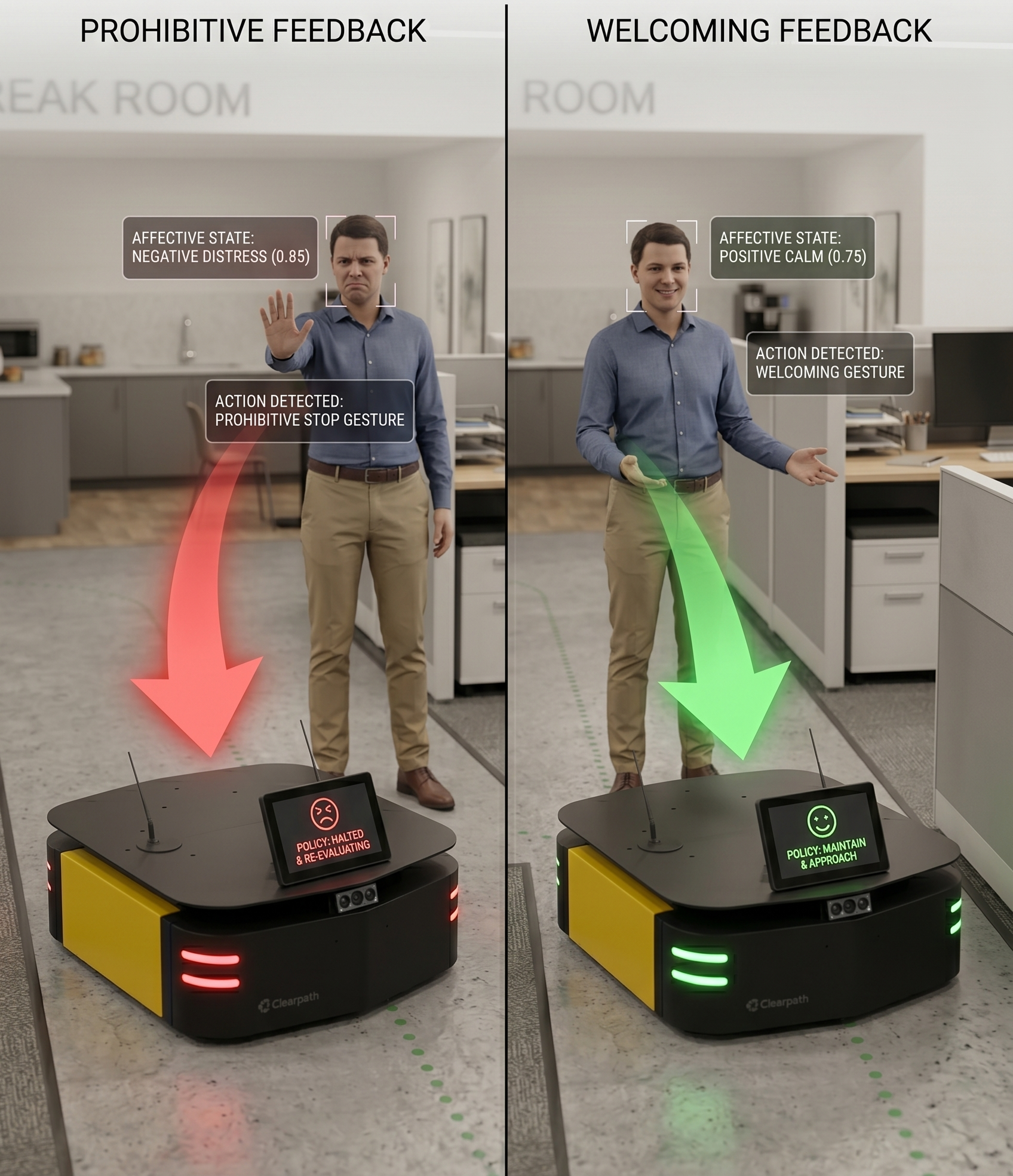
In the domestic environment, RoboCARE will evaluate how a service robot understands indoor spaces, recognises human activities and emotional responses, adapts its behaviour and communicates its decisions during everyday interaction.
The scenarios examine place-aware navigation, action-aware adaptation, affective feedback learning and explainable human–robot dialogue.
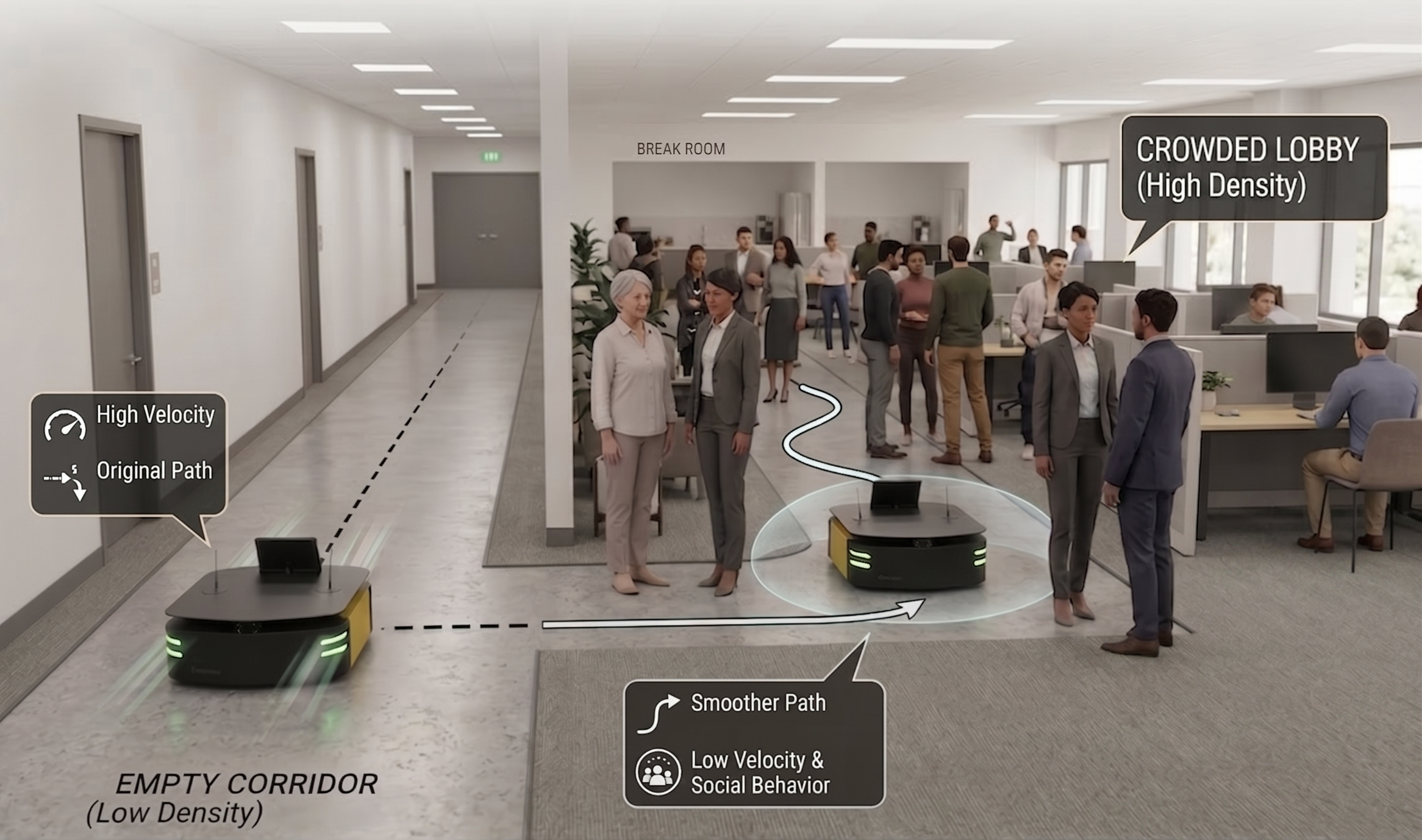
In the crowded environment, RoboCARE will evaluate how a service robot perceives changing social density, navigates safely among multiple people and adapts its motion and interaction behaviour in dynamic shared spaces.
The scenarios examine crowd-aware navigation, place-and-crowd adaptation, behavioural familiarity and explainable human–robot communication.