
RoboCARE

Compassionate, Adaptive, Robust and Explainable Robots

Developing the next generation of socially-aware, adaptive and trustworthy robotic systems for human-centred care.

robocare logo s.png

Research Pillars

The RoboCARE framework is built around four interconnected research pillars. Together they enable socially-aware perception, adaptive intelligence, explainable decision-making and embodied robotic assistance for trustworthy human-centred care.

01.

PERCEIVE

Social perception & multimodal understanding.

Understanding people through vision, speech, emotion and activity recognition.


02.

ADAPT

Adaptive intelligence & personalised assistance.

Learning from users and contexts to continuously personalise robotic behaviour, interaction strategies and assistance.

03.

CONVEY

Explainable interaction & trustworthy communication

Providing transparent explanations, intuitive communication and understandable AI decisions that strengthen user trust.

04.

EXHIBIT

Embodied robotic behaviour & real-world deployment

Integrating perception, adaptation and explainability into autonomous robotic systems operating in healthcare environments.

RoboCARE in Action

RoboCARE will be validated through two representative experimental environments, designed to assess socially-aware perception, adaptation, explainability and navigation under realistic human–robot interaction conditions.

USE CASE 01

Domestic Environments

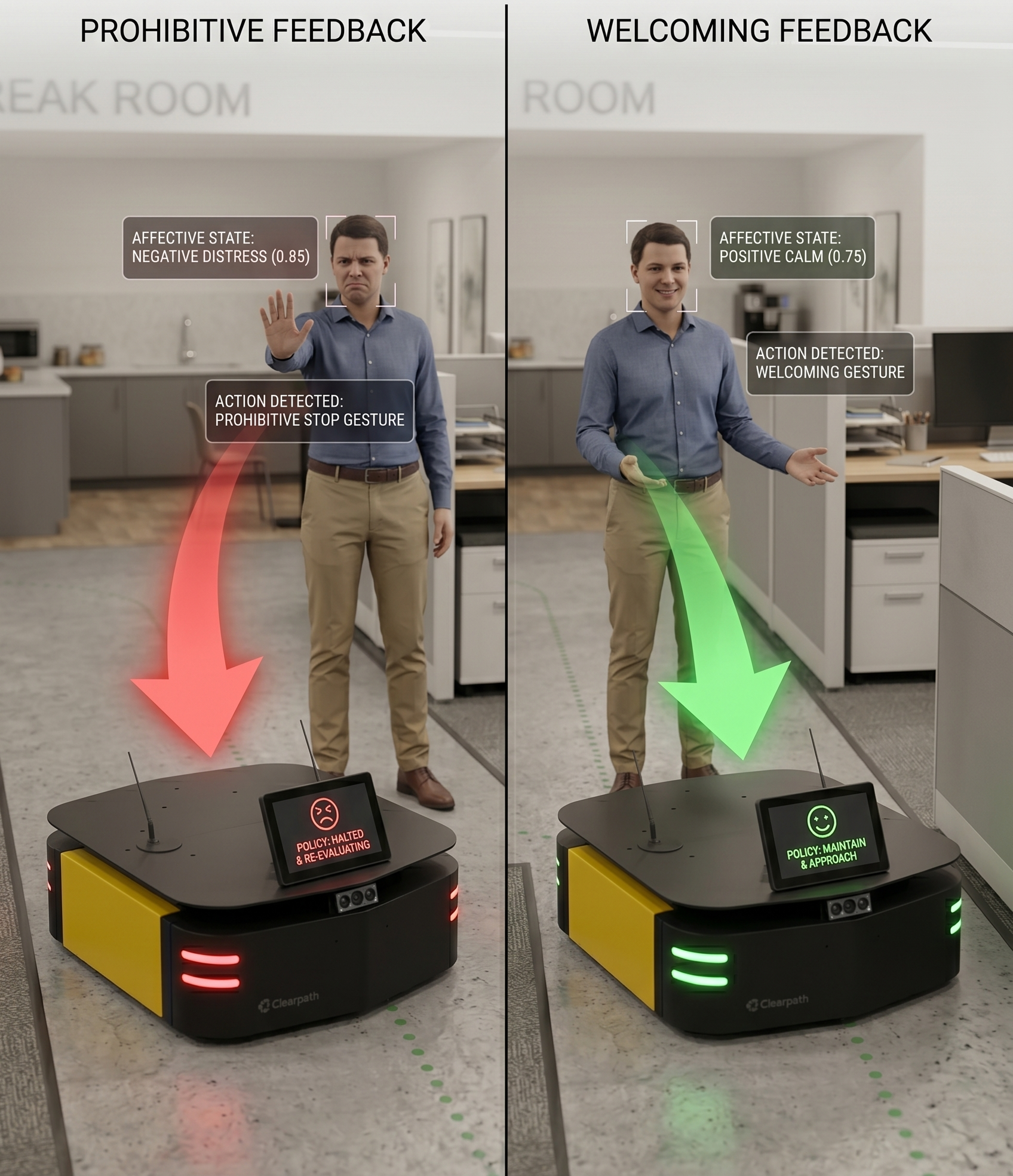
In the domestic environment, RoboCARE will evaluate how a service robot understands indoor spaces, recognises human activities and emotional responses, adapts its behaviour and communicates its decisions during everyday interaction.

The scenarios examine place-aware navigation, action-aware adaptation, affective feedback learning and explainable human–robot dialogue.

Place-Aware Navigation

Action-Aware Adaptation

Affective Feedback

Explainable Dialogue

affectivefeedbacklearning

USE CASE 02

Crowded Environments

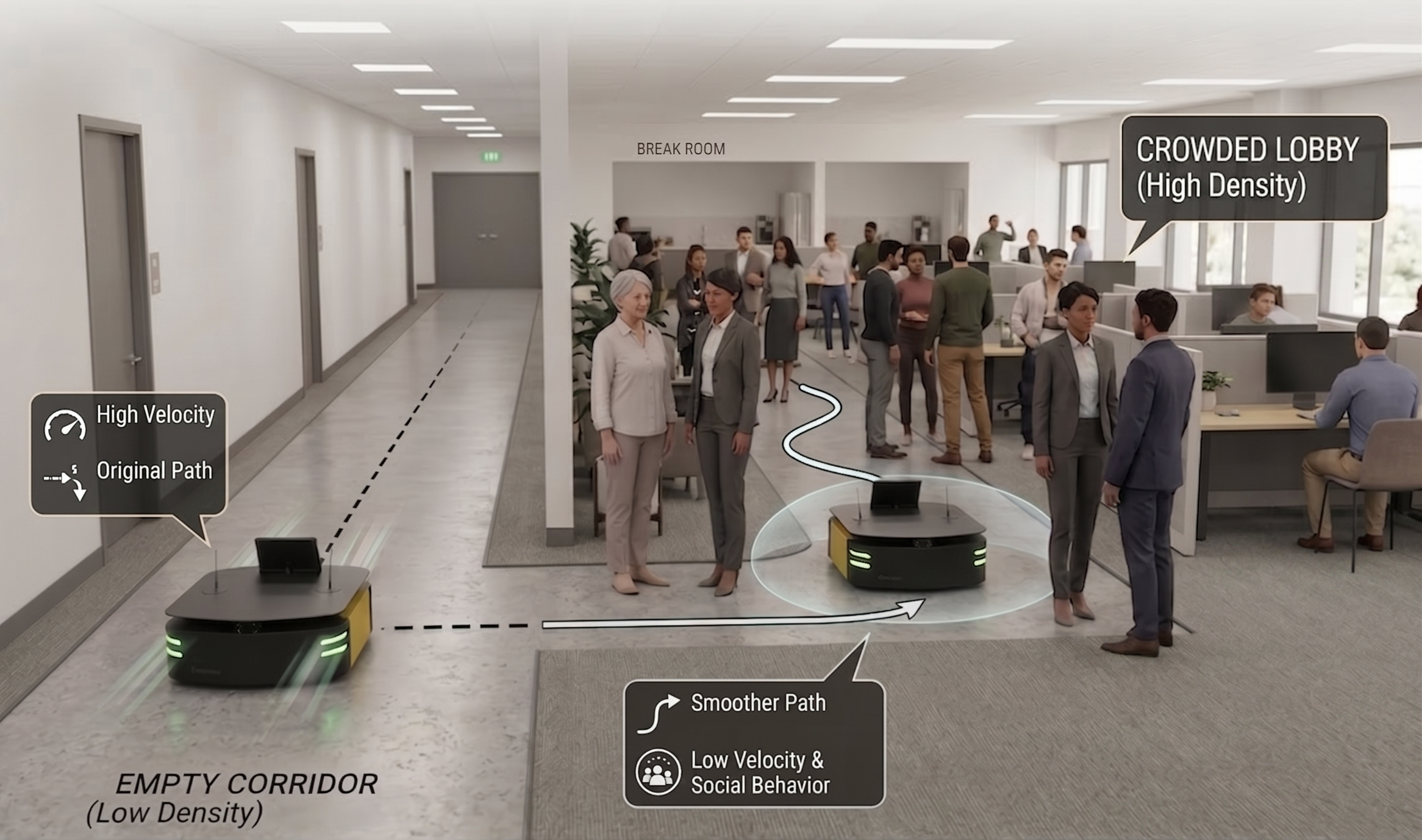
In the crowded environment, RoboCARE will evaluate how a service robot perceives changing social density, navigates safely among multiple people and adapts its motion and interaction behaviour in dynamic shared spaces.

The scenarios examine crowd-aware navigation, place-and-crowd adaptation, behavioural familiarity and explainable human–robot communication.

Crowd-Aware Navigation

Place & Crowd Adaptation

Behavioural Familiarity

Explainable Communication

empty2crowded environment

Behind RoboCARE

RoboCARE is developed by the Robotics and Automation Laboratory of Democritus University of Thrace, bringing together researchers in robotics, artificial intelligence, human–robot interaction and trustworthy autonomous systems.

Democritus University of Thrace
Laboratory of Robotics and Automation

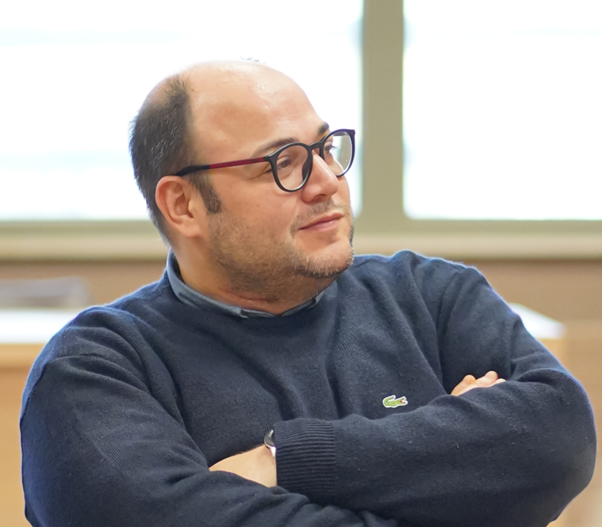
gasteratos2

Professor Antonios Gasteratos

Principal Investigator

“Our vision is to develop socially-aware, adaptive and explainable robotic systems that naturally collaborate with people in everyday environments.”

Research Team

ioanniskansizoglou

Ioannis Kansizoglou

Assistant Professor

symeonidis

Symeon
Symeonidis

Assistant Professor

citations

Michail
Kosmidis

PhD Student

elenisianti

Eleni
Sianti

PhD Student

45314852

Altzi
Tsanko

PhD Student

Scroll to Top